Ice packs vs ice: what keeps a cooler colder
Do reusable ice packs actually work better than ice? For most trips, yes — if the packs are the right size and start properly frozen. Here is the honest comparison, including where plain ice still wins.
Cubed ice, block ice and ice packs
Cubed ice cools fast because it has a lot of surface. It fills gaps between cans and chills warm drinks quickly. The same surface is why it melts fast, and the melt water ends up in the bottom of the cooler with your food.
Block ice melts more slowly than cubes because it has less surface for its weight. It lasts longer, but it is heavy, awkward and still turns into water.
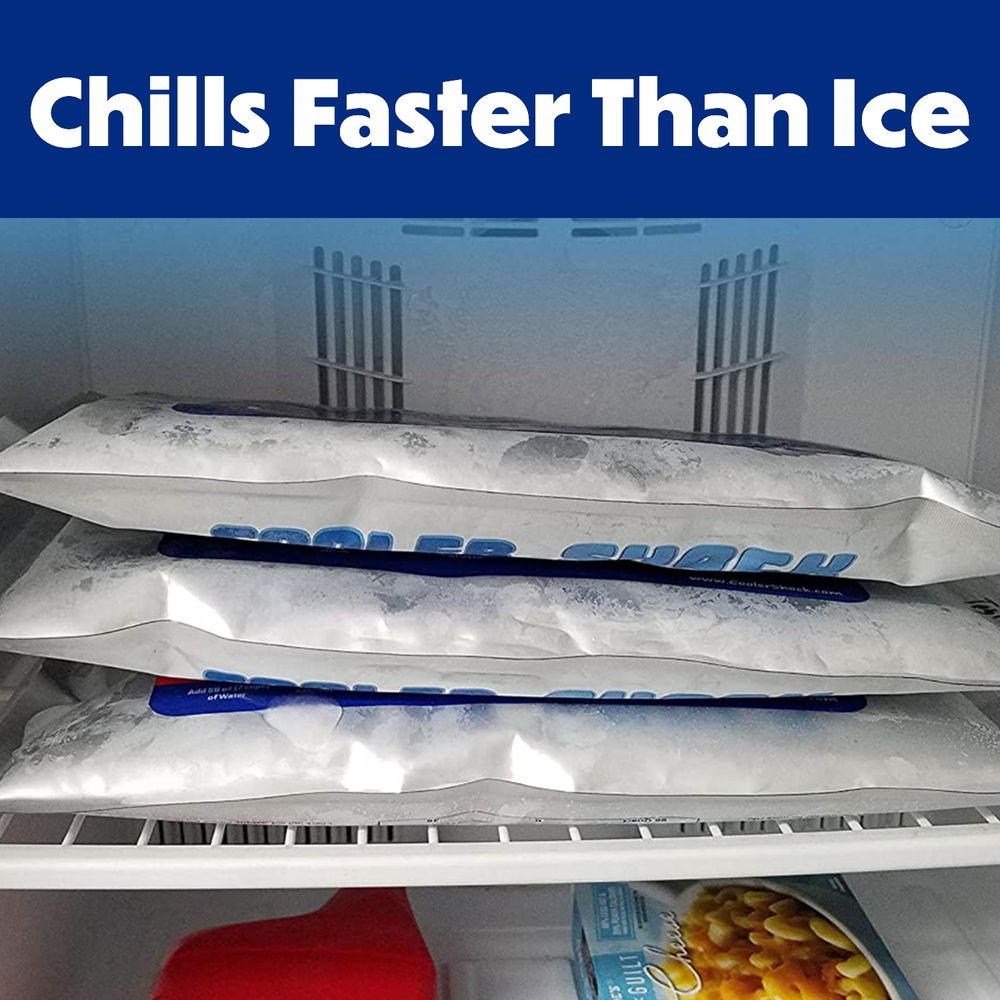
Reusable ice packs behave like a block that never melts into the cooler. A frozen pack absorbs heat steadily, holds its shape, and goes back in the freezer when you get home. Ours freeze at 18°F, which means they start colder than either cubes or block ice.
Does the temperature of an ice pack matter?
It does. Water ice sits at 32°F while it melts. A pack whose mix freezes at a lower temperature pulls heat out of the cooler harder and keeps the contents further from the point where food starts to warm. Our cooling mix freezes and holds at 18°F (-8°C).
There is one catch: a pack that cold can freeze delicate items it touches. Keep lettuce, berries and soft cheese a layer away from the packs, and put meat and frozen food right against them.
How long do reusable ice packs stay cold?
In a size-matched hard cooler kept in the shade, our hard case packs and large pouches stay frozen and cold for 24 to 48 hours. In a soft cooler, plan on a long day. Small lunch box packs hold for about 8 to 12 hours in a closed lunch bag.
The biggest factors are the cooler itself, the starting temperature of what you pack, the shade, and the number of times the lid opens. A pre-chilled cooler loaded with cold food can easily double the life of the same packs in a warm cooler loaded with warm cans.
Where ice packs win
- No melt water — food stays dry and nothing floats.
- Reusable for years, so you stop buying bags of ice every trip.
- Thinner than a bag of ice, leaving more room for food and drinks.
- Colder than ice at 18°F, so frozen food stays frozen longer.
- Predictable shapes that stack and line the walls.
Where ice still helps
Ice is still the quickest way to chill a load of warm drinks, and on trips of three days or more it is a useful top-up. Our recommendation for long trips: packs on the floor and walls for the long cold, a bag of cubes on top for the drinks. You will buy about half the ice, and the packs will still be frozen when the cubes are gone.
Getting the most from ice packs
- Freeze new packs for 24–48 hours before the first trip.
- Store packs in the freezer between trips so they are always ready.
- Pre-chill the cooler and pack cold food, not room-temperature food.
- Put one pack on top — warm air enters from above.
- Keep the cooler shaded and the lid closed as much as you can.
Two packs that fit this job
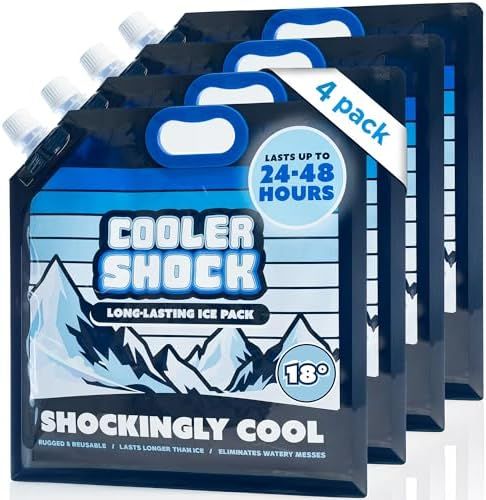
Screw-Top Ice Packs with Handle, Medium 11" x 11", 4 Pack
11" x 11" packs with a grab handle cut into the pouch.
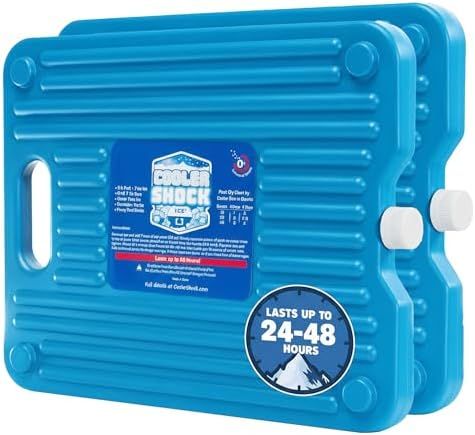
Hard Case Ice Packs, Clear, 2 Pack
Two clear 13" x 10" shells for a 16–32 qt cooler.